IMVU: Social Chat & Avatar app
- 4.5
- Rating
- 50.00M
- Installs
- Free
- Price

 Analysis by App-foxy
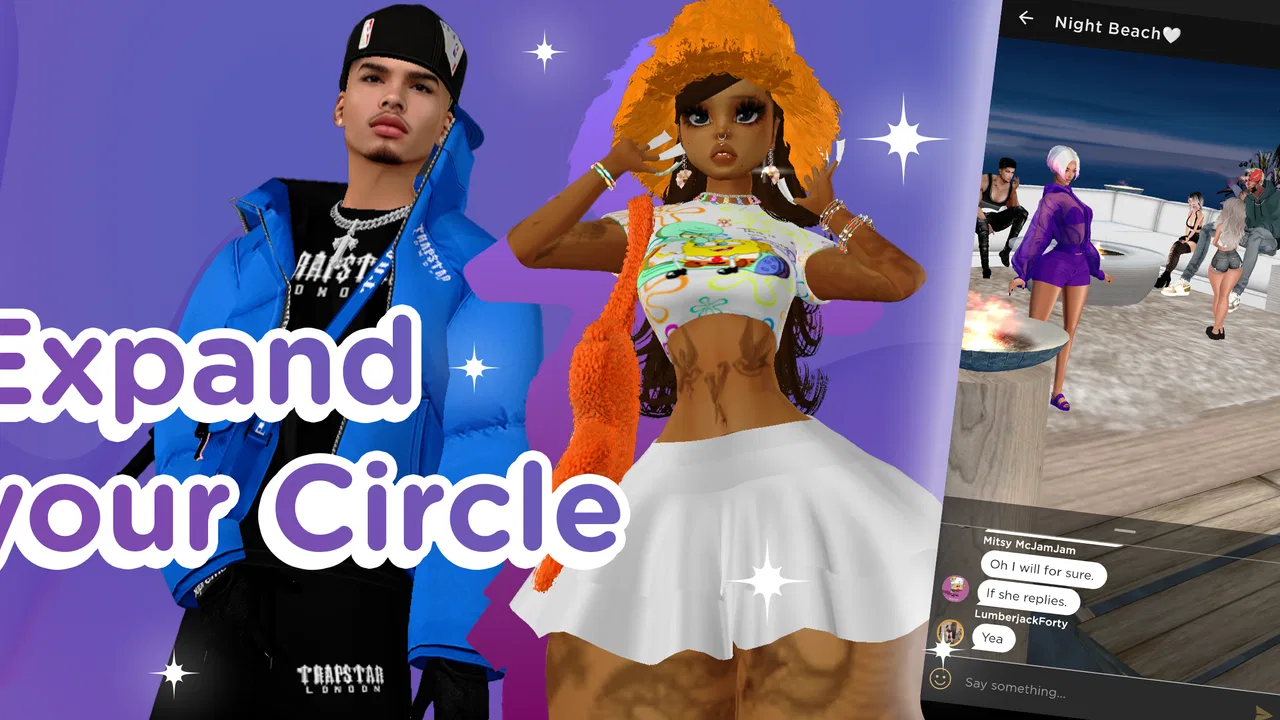
I approached IMVU as a social app first and an avatar experience second. Its central idea is simple: you create a digital character, dress and position that character in three-dimensional spaces, and use the environment to meet and chat with other people. That makes it feel quite different from a normal messaging app, but also different from a conventional game because the main reward is interaction rather than completing levels.
After spending time with it, my impression is that IMVU works best when you treat it as a visual social lounge. You can shape how you appear, browse virtual settings, and decide how much conversation you want to have. The experience is free to start, and the app comes from IMVU, Inc. It belongs to the social category, carries a Teen age rating, and has grown into a large community with more than ten million installs, an average score of 4.5 from roughly seven hundred thousand ratings, and about one hundred seventeen thousand written reviews.
Those figures suggest that the concept has lasting appeal, but they do not remove the need to use common sense. This is a place where identity, attention, purchases, and conversations overlap. My recommendation depends less on whether you enjoy avatar customization and more on whether you are comfortable managing boundaries in a busy, user-driven social environment.
You May Also Like

 Blood Strike: 2.5 Anniversary
Blood Strike’s Loadouts Turn Every Drop Into a Tactical Gamble
A close look at Blood Strike’s custom loadouts: how fast access to signature weapons reshapes its battle royale rhythm, rewards preparation, and narrows the gap between fights.

 Pandora - Music & Podcasts
Pandora’s Music Is Easy to Start, but Harder to Recover
Pandora’s strength is its low-effort path from a seed to a station. Its weak spot is how much confidence it asks you to place in connection, setup, and quiet recovery.

 8 Ball Pool
 Is Built on Rivalries, Rematches, and Routine
A close look at the rivalries, rematches, shared routines, and unanswered safety questions that turn a quick pool match into a persistent mobile community.

 Samsung Music
’s Quiet Strength Is Playing What You Already Own
Its reach comes less from spectacle than from dependable access to a personal library. That simplicity is both the app’s strongest retention engine and its ceiling.

 AccuWeather: Weather Radar
AccuWeather Review: A Quick, Clear Forecast for Everyday Decisions
For everyday plans, the best forecast is the one you can understand quickly. AccuWeather makes rain timing, radar, and local conditions easy to act on, with a few trade-offs.

 Hill Climb Racing
Why Hill Climb Racing Still Turns Crashes Into One More Run
A tiny car, a bumpy hill and one more upgrade: Hill Climb Racing keeps resurfacing because its simple chaos makes every near-miss feel personal.
More From Our News Desk
View All News


What the experience feels like in everyday use
The first thing that stands out is the shift from profile pictures to a character you actively present. Instead of simply choosing an image and writing a short bio, you communicate through an avatar, clothing choices, poses, rooms, and the overall mood you create. That visual layer gives conversations more context, even when the actual exchange is still ordinary text chat.
I found that this makes the app appealing to people who enjoy self-expression but do not necessarily want to post real photographs. You can experiment with a style, change the impression your character gives, and move between different social situations without rebuilding your entire online identity elsewhere. It is a useful middle ground between a traditional chat service and a fully structured online game.
At the same time, the three-dimensional presentation can make the experience feel busier than a standard social feed. There is more to look at, more to customize, and more social signaling to interpret. If you prefer opening an app, reading a few updates, and leaving quickly, IMVU may feel like work. If you enjoy browsing outfits, arranging a look, and entering conversations through a visual setting, it has a clearer purpose.
A realistic everyday use case would be a quiet evening when you want casual company without committing to a voice call. I might open the app, adjust my avatar, look through available social spaces, and spend a short period chatting. That is more involved than sending messages in a conventional app, but it can also feel more playful and intentional. The important difference is that I am choosing to participate in a scene rather than merely responding to notifications.
Customization is the main reason to stay
The avatar system is not just decoration; it is the app’s social language. Clothing, appearance, and presentation influence how other users read you before a conversation develops. I liked that this gives users a way to test different styles without tying every experiment to their offline appearance.
My practical advice is to build a recognizable baseline before chasing every new look. A consistent visual identity makes it easier for people you meet to recognize you, while occasional changes keep the experience from becoming repetitive. I would also avoid spending immediately just because a premium-looking item catches your eye. First learn what kind of social use you actually get from the app, then decide whether additional customization is worth the cost.
The free entry point is helpful, but the purchase structure deserves attention. Optional in-app items range from $0.49 to $199.99 each. That is a very wide spread, so I would treat the app like a social service with a shop attached rather than assuming every appealing element is included. Before confirming a purchase, I would check exactly what the item changes, whether it affects appearance or access, and whether it is something I will still value after the novelty fades.
This is one of the less obvious trade-offs: customization can improve the experience, but it can also become the experience. If you spend more time comparing items than talking to people, the app may be pulling your attention toward collecting rather than socializing. I found it more satisfying when purchases, if any, supported a style I had already decided on instead of directing my whole session.
Conversation requires deliberate boundaries
Because IMVU is built around meeting people, the quality of your experience depends heavily on who you choose to engage with. A polished avatar or friendly room does not tell you whether another person is trustworthy. I would keep early conversations light, avoid sharing identifying details, and move away from anyone who pressures me to reveal more than I want.
That advice is especially important for younger users because the app is rated Teen, not designed as a private family messaging space. Parents and guardians should discuss what information must stay private, how to end an uncomfortable conversation, and when to involve an adult. I would not rely on the visual style of the app to make social risks obvious; a playful avatar environment can still contain ordinary online pressure.
One useful habit is to separate your public character from your private identity. Use a nickname that does not expose your real name, avoid mentioning school, workplace, neighborhood, or daily routines, and be cautious when someone quickly asks to move the conversation elsewhere. The point is not to assume every stranger has bad intentions. It is to make sure friendliness does not become a shortcut around your own safety rules.
I also recommend leaving conversations early rather than trying to win an argument with a rude user. In a social app, your attention is the resource you control most directly. If a room or chat becomes uncomfortable, the best response is usually to disengage, use the available account controls, and preserve evidence if a serious issue needs to be reported.
Trust comes from choices you can see and manage
My trust in a social app is based on practical control rather than atmosphere. I want to know what I can choose before I share, how easily I can stop an interaction, and whether purchases require a deliberate action. With IMVU, I would review the account and privacy options during setup instead of accepting every default without reading it.
That first review is worth doing because social apps often become more comfortable once your profile is established, but comfort can also lead to oversharing. I would check what is visible on the profile, who can contact me, and which notifications are useful. If a setting is not relevant to the way I plan to use the app, I would keep it as restricted as practical.
There is a difference between having controls and remembering to use them. I found the strongest user protection comes from making decisions before a problem occurs: decide what personal information is off-limits, set a spending rule, and choose a regular time to review the account. This is more reliable than trying to improvise after an uncomfortable conversation or an unwanted charge.
For families, I would make the setup process collaborative rather than treating the Teen rating as a complete safety guarantee. Agree on whether purchases are allowed, discuss how contact requests should be handled, and make sure the user knows how to stop interacting with someone. These conversations are more useful than simply warning someone to “be careful” because they turn caution into specific actions.
Data-sensitive moments deserve extra attention
The most sensitive moments are not limited to registration. They include building a profile, entering conversations, adding personal details, making purchases, and deciding whether to continue contact outside the app. Each step increases the amount of context another person may form about you, even if no single detail seems important by itself.
I would therefore keep the profile expressive but deliberately incomplete. An avatar can communicate personality without revealing a real location, schedule, or identifiable photograph. If you want to make friends, share interests in broad terms first. You can always become more familiar with someone gradually; you cannot easily retract information once it has been copied or remembered.
Purchases are another data-sensitive moment because they involve both money and attention. I would use device-level purchase protections, avoid saving payment details unnecessarily if the device is shared, and review the final confirmation screen carefully. The broad price range means a casual tap can have very different consequences depending on the item, so a pause before confirming is sensible.
I also prefer to keep notifications limited to what helps me use the app. Constant alerts can make a social service feel urgent, encouraging quick replies or impulsive returns. Turning off nonessential notifications is not a rejection of the community; it is a way to decide when the community gets access to my attention.
When evaluating any app, I look for clear user choices around account use and information sharing, but I will not treat a stylish interface as proof of strong privacy. My approach here is straightforward: read the privacy and account screens, grant only what is necessary for the way I intend to use the service, and revisit those choices if my use changes. That keeps the decision grounded in visible controls rather than assumptions.
How it compares with ordinary social alternatives
Compared with a standard messaging app, IMVU offers more visual identity and more opportunities to express yourself through an avatar. A messaging service is usually faster for coordinating plans or keeping up with people you already know. IMVU is better suited to creating a social setting where presentation and discovery are part of the interaction.
Compared with a typical social network, it feels less centered on a feed of real-life updates. That can be a benefit if you want distance from posting photographs, achievements, or daily events. The downside is that the virtual presentation can require more time and attention before you reach the simple conversation you wanted.
Compared with an online multiplayer game, the motivation is different. You are not opening IMVU primarily for competition, missions, or progression through a campaign. If you want clear objectives and skill-based play, a dedicated game will probably be a better choice. If you want a character-led social space where chatting and appearance matter, this app has a more fitting design.
There is also a meaningful difference from anonymous chat services. The avatar gives interaction a layer of identity, but it should not be mistaken for verification. A carefully designed character can make a conversation feel personal while telling you very little about the person behind it. I would enjoy the creative side without treating digital presentation as evidence of trustworthiness.
Where the experience can become frustrating
The biggest limitation is that the app’s value depends on finding conversations and spaces that suit you. No amount of avatar customization can guarantee that other users will be interesting, respectful, or available when you are online. Some sessions may feel lively, while others may leave you browsing without finding a meaningful connection.
The second limitation is decision fatigue. There can be many possible looks, social choices, and interactions, and that freedom is not always relaxing. I would set a small goal for each session, such as adjusting one part of the avatar or having one short conversation, rather than trying to explore everything at once.
The purchase system may also be a poor fit for people who dislike virtual-item economies. Even when the app is free to install, the presence of items across a broad price range can make the experience feel less predictable. If you want a social app with almost no temptation to spend, a basic messaging platform is the safer match for your habits.
Finally, users who want strong separation between online socializing and personal identity should be cautious about how much they reveal over time. The app can support a fictional or stylized presentation, but conversations can still become personal. I would skip it if I knew I would struggle to maintain boundaries with strangers or resist unplanned purchases.
Who should try it and who should pass
I would recommend IMVU to someone who enjoys fashioning a digital persona, likes casual text-based socializing, and wants something more visual than a normal chat app. It is also a reasonable choice for people who prefer experimenting with an avatar instead of using their real photograph as the center of their profile.
I would suggest starting slowly: create the character, explore the social side without buying anything, and learn the account controls before becoming heavily invested. That gives you a fair sense of whether the community and pace suit you. If you find yourself returning for conversations and creative expression, optional customization may add value later.
I would steer competitive players toward a dedicated multiplayer game, and I would steer people seeking efficient communication toward a conventional messenger. I would also advise anyone with a very low tolerance for unsolicited contact, virtual-item pricing, or profile management to choose a simpler social tool.
A measured recommendation
IMVU is an unusual social app because its strongest feature is not a single chat function; it is the feeling of entering a social world through a character you have shaped yourself. I enjoyed that extra layer when I wanted casual interaction and a creative break from ordinary profiles. The app gives self-expression more room than a standard messenger, while remaining less objective-driven than a traditional game.
My recommendation is positive but careful. Use the free starting point to test the community, keep your personal information limited, review visible account and privacy choices, and set a firm purchase boundary before browsing paid items. Remember that an avatar is a form of expression, not proof of who another person is.
With those habits, IMVU can be a fun place to experiment with identity and meet people in a more visual format. Without them, the same openness that makes the app interesting can create pressure, distraction, or unnecessary spending. The current version is 14.3.0.140300001, it requires at least iOS or Android version 10, and the app is free to begin using. For me, it is worth trying when I want social discovery with a creative twist, but it is not the app I would choose for private communication, fast coordination, or structured gameplay.
FAQs for IMVU: Social Chat & Avatar app
01What is IMVU: Social Chat & Avatar app?
IMVU is a virtual world app that allows users to create customized 3D avatars and engage in social interactions. Users can chat, play games, and explore various virtual environments. The app offers a unique blend of social networking and virtual reality, providing an immersive experience for meeting new people.
02Is IMVU free to use?
IMVU is free to download and use; however, it offers in-app purchases and a virtual currency called "Credits." While you can enjoy many features for free, purchasing Credits allows for enhanced customization of avatars and access to premium content. Users should be aware of potential spending within the app.
03Can I customize my avatar on IMVU?
Yes, avatar customization is a key feature of IMVU. Users can personalize their avatars with a wide range of clothing, accessories, and styles. The app allows for detailed customization, enabling users to express their unique identities and styles in the virtual world. Some customization options may require in-app purchases.
04Is IMVU suitable for children?
IMVU is rated for users aged 13 and above, but parental guidance is recommended. The app includes social interactions that may not be suitable for young children. Parents should monitor usage and utilize available privacy settings to ensure a safe experience for their teenagers.
05How can I interact with other users on IMVU?
Interaction on IMVU occurs through chatting, participating in virtual events, and exploring diverse environments. Users can join chat rooms and engage in conversations with others. There are also opportunities to play games and collaborate on projects within the virtual space, fostering a social and interactive experience.
Pros
- Highly customizable avatars.
- Diverse and active community.
- Frequent updates and events.
- Cross-platform compatibility.
- User-friendly interface.
Cons
- In-app purchases can be costly.
- Occasional lag in chat rooms.
- Limited features without premium.
- Ads can be intrusive.
- Requires stable internet connection.

IMVU: Social Chat & Avatar app
Gallery